Markets in motion: building for a world that won’t sit still
How digital innovation, better information and greater resilience are redefining competitive advantage.
Read time: 7 mins Added: 23/09/26

At the Lloyds Markets Summit 2026, one theme emerged repeatedly from leaders from across financial markets, industry and policy - the organisations creating the advantage today are not those trying to predict the future, but those building the capability to respond faster when it arrives.
Opening the Summit, Carla Antunes da Silva, CEO of Lloyds Bank Corporate Markets, highlighted three questions facing organisations today: how to invest for growth, how to harness new technologies, and how to navigate shifting markets while maintaining a safe and sustainable business model.
Her advice was clear: “Doing nothing is not a strategy.”
Across discussions spanning digital capital markets, risk and geopolitics, that idea surfaced repeatedly. Businesses may not be able to predict every market movement, but they can build the capabilities, information and partnerships needed to strengthen resilience and respond effectively.
Digital markets are moving from concept towards reality
For several years, tokenisation and digital assets have promised to change how capital markets operate. The discussion at this year’s Summit confirms that discussion has moved on from what the technology could do to where it can create practical value.
The use cases are varied and are emerging across digital bonds, tokenised funds, payments and settlement. Sebastien Danloy, Chief Business Officer at Euroclear, highlighted collateral management as one area with significant potential, specifically the ability to move tokenised assets intraday and use them more efficiently. He also stressed that digital initiatives ultimately need to create value for the wider ecosystem, rather than individual participants in isolation.
The longer-term ambition is not necessarily a separate digital financial system, but greater convergence between traditional and digital markets. As Dame Julia Hoggett, CEO of London Stock Exchange, put it when asked what success could look like in three to five years: “We don’t call them digital markets anymore, we just call them markets.”

Dame Julia Hoggett CEO, London Stock Exchange plcWe don’t call them digital markets anymore, we just call them markets.
For Hoggett, the test is whether new technology enables markets to transfer value and manage liquidity and risk more effectively, safely and compliantly.
None of this happens overnight, and old and new infrastructure will run in parallel for some time. But understanding digital finance is fast becoming essential, and the institutions that adjust soonest will lead the rest. Before long, this won't be knowledge confined to specialist teams – it will be something the whole organisation needs.
For a closer look at how this shift is already taking shape in practice, Lloyds’ Forward Momentum report features “Right here, right now: the rise of real-time treasury”, exploring how technology is changing the way businesses manage liquidity, payments and treasury operations.
Resilience increasingly means having the information to act
Rates, technology, supply chains and geopolitics are increasingly interconnected, creating risks that can move quickly across businesses and markets. The Real Risk in Practice panel focused on what that means for decision-making on the ground. These risks can’t be assessed in isolation as several can emerge at once.
For Catriona Meharry, Group Treasurer at Lloyds Banking Group, timely information is fundamental. “Real-time MI is probably the most important thing I could possibly have,” she said, pointing to real-time liquidity and payments data and early-warning indicators as increasingly valuable tools for treasury teams.
Andrew Binnie, Group Treasurer at SSE, made a similar point, arguing that better management information helps organisations become more agile over time, including when assessing how changing rates could affect the balance sheet.
Preparedness also means recognising that inaction carries its own risks. As Binnie put it later in the discussion, “the choice to do nothing is a specific choice” – and one that needs to be evaluated as carefully as taking action.
The takeaway is not that businesses should react to every new signal. It is that resilience increasingly depends on having the information, scenarios and flexibility needed to make informed decisions when conditions change.

Andrew Binnie Group Treasurer, SSE plcThe choice to do nothing is a specific choice.
Geopolitics is changing the calculation
The same need for preparedness applies to geopolitics. As volatility increasingly shapes business decisions, the challenge is not simply to manage disruption, but to preserve the ability to act as conditions change.
Sir Richard Moore, Senior Strategist, Sixth Street and former Chief of MI6, pointed to the opportunity for organisations able to navigate that environment: “Those people who are good at navigating volatility and uncertainty are going to do well in this world because there’s still plenty of opportunity.”
That requires rethinking some of the assumptions that shaped the previous era of globalisation. Gideon Rachman, Chief Foreign Affairs Commentator at the Financial Times, noted that businesses could once “reach for the cheapest solution”, with efficiency often taking precedence. A succession of shocks has exposed the vulnerabilities of that model, increasing the value of redundancy across supply chains, energy sources and other critical dependencies.
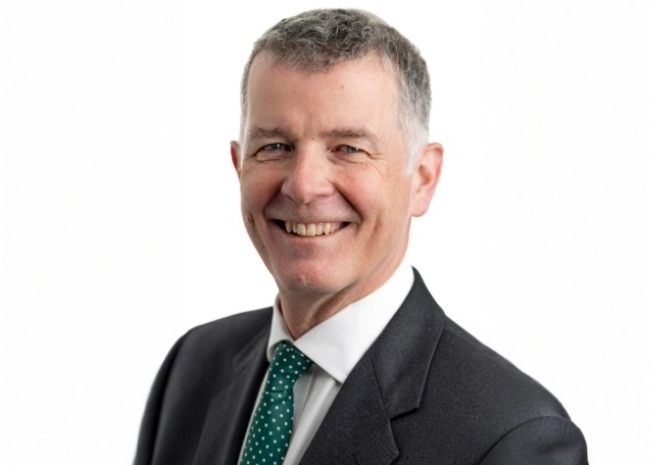
Sir Richard Moore Senior Strategist, Sixth Street and former Chief of MI6Those people who are good at navigating volatility and uncertainty are going to do well in this world because there’s still plenty of opportunity.
The implication is not to abandon efficiency, but to balance it with resilience and optionality. Rather than optimising for one expected outcome, businesses increasingly need the capacity to respond across several.
That also places a premium on strategic discipline. Former Downing Street communications director, strategist and The Rest Is Politics UK host Alastair Campbell argued that, as political and media cycles accelerate, “the pressure should be to be more strategic, not less.” Katty Kay, BBC US Special Correspondent and The Rest Is Politics US host similarly stressed the importance of longer-term direction: strategy starts with “knowing where you want to go”.
Taken together, the message was that volatility need not simply be endured. Greater resilience, clearer priorities and the flexibility to act can help businesses absorb disruption while remaining ready to capture the opportunities it creates.
Staying ahead of markets in motion
That balance was reflected in John Langley, CEO of Lloyds’ Corporate & Institutional Banking, closing remarks. Competitive advantage, he argued, is increasingly determined by the quality and speed of decision-making - the ability to allocate capital efficiently, manage risk thoughtfully and adapt with confidence.
“The organisations that succeed will not necessarily be those that predict the future the most accurately,” he said. “They will be the ones that build resilience, agility, and partnerships needed to respond as it unfolds.”
Markets will continue to move. Technology will continue to advance. Geopolitics will continue to surprise.
Across every discussion from digital market infrastructure to geopolitical risk, one theme remained constant – competitive advantage belongs to organisations that can make confident decisions before certainty arrives.
To stay informed, businesses can subscribe to Lloyds Market Insights, or request a callback to discuss what these developments could mean for their organisation.
You may also be interested in

Forward Momentum
Explore how organisations can build resilience, embrace innovation and move forward with momentum in the context of a complex and rapidly changing environment.

Insights for corporates and institutions
Get the latest insights, reports, expert commentary and client case studies for corporates and institutions.

Markets Insights
Make informed decisions in today's dynamic markets with the latest reports, market intelligence and insights from our experts straight to your inbox.
While all reasonable care has been taken to ensure that the information in this article is accurate, no liability is accepted by Lloyds Bank plc for any loss or damage caused to any person relying on any statement or omission in this article. This article is produced for information only and should not be relied on as offering advice for any set of circumstances and specific advice should always be sought in each situation.
Some of the views, opinions or forecasts expressed in this document may represent views or opinions of forum participants and are not intended to be, and should not be viewed as advice or a recommendation from Lloyds Bank or any other party.