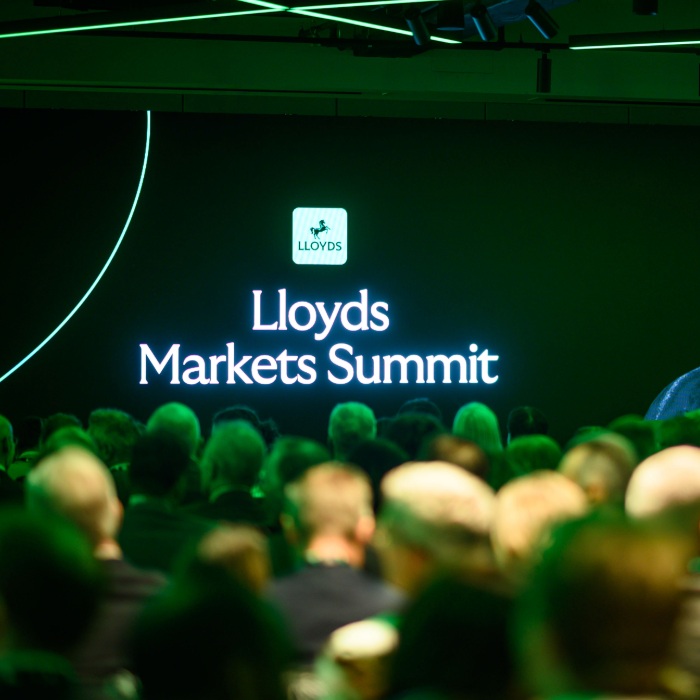
Bill Mansfield, Co-Head of Global Markets, Lloyds Corporate & Institutional
The theme is a real risk in practice, and I think it is kind of following a tough act with, John Winter, more of a kind of, a lot of macro themes and geopolitical themes.
Varun, I'm going to pick on you first, and you kind of touched on it, inflation as a risk in your portfolio, and when I think of your risk, it's very much tied and related to inflation, kind of the macroeconomic environment. You know, a little bit more on how you manage that risk through the cycle, both from origination to management and ultimately repayment.
Varun Khanna, Partner Private Credit, KKR
If you think about inflation and what that does to how we think about portfolio construction, you have to be dynamic to state the obvious in how you invest. So, I mean, in a very simplistic way, I would say, how we invest in consumer finance today or post ‘22 versus pre-’22 is quite different.
Previously, so pre-’22 when inflation was less of a topic, when rates were close to zero for a long, long period of time, when we weren't worried about affordability, we were happy and comfortable with a greater portion of our portfolio being not super prime borrowers, so a lot more self-employed individuals, a lot more first time borrowers. That segment of our borrow base has shrunk quite a bit, as we get more and more concerned about the impact of higher inflation and higher rates on the affordability and then eventual performance of the loans.
Another way to think about – what does inflation do to portfolio construction – is how an average investment performs in our universe is linked to borrower performance, so we touched on that, but also asset price performance. So if my view is in a higher inflation world and a higher rates world, probably more of the latter than the former, house prices are more at risk, right? How I value a portfolio of mortgages is going to be different, to state the obvious again in 2021 versus today, because that will drive the ultimate recovery of this portfolio.
Bill Mansfield, Co-Head of Global Markets, Lloyds Corporate & Institutional
With climate risk and your portfolio business, and how do you think about, it probably plays to your advantage in what you do, but how do you think about climate risk and manage that and drive the kind of strategy of your company?
Andrew Binnie, Group Treasurer, SSE
So SSE's strategy is to tackle it head on. We're building energy assets and grid infrastructure that is needed for the clean energy transition. You know, the climate related risks and opportunities that are at the centre of how we run our business and how we allocate capital.
And it also means we're planning decades into the future. I think, in the previous panel there was discussion about how you need to be spending money today to mitigate potential risks or exploit opportunities that are going to happen 5, 10, 15 years in the future; so we're taking a very long-term view in terms of the business we're building.
Bill Mansfield, Co-Head of Global Markets, Lloyds Corporate & Institutional
And, Matt, probably not directly in your remit, but how do you, how does Ford think about supply chain risk and what kind of changes have you made, with some of the challenges we've seen from a geopolitical perspective?
Matt Armbruster, Treasurer, Ford Europe
Supply chain risk fits into our broader risk appetite and drives, you know, kind of how we're thinking about our funding and risk decisions. And then maybe in that regard last year was an example where 2025 started and I think we had, you know, one view of the year as we got on, as there was the change of the US administration, as the tariff wars begun, that's something that started to deteriorate and change our playbook out. So that was an area where supply chain risk increased, geopolitical risk increased. I started my year, not planning to refinance some debt that I had maturing in Europe, that was a scenario though as the year played on, as we got more into the second quarter our risk KPI is starting to change colours, led to a change in approach and made us then look at funding and our options a lot closer. And just you know one of the examples, that we had there was, what it triggered was an evaluation of the funding tools available. One of those tools was in the UK export facility that we have access to and in a deep relationship here in the UK.
Hayley Basterfield, Global Head of DCM & Syndicate, Lloyds Corporate & Institutional
What makes a hedge funding structure or liquidity plan genuinely usable in a stressed environment rather than just being reassuring on paper?
Catriona Meharry, Group Treasurer, Lloyds Banking Group
Look, I think I look from a liquidity perspective, I think the most important thing that you can have in terms of a situation is MI. So we need to, you know, as a treasurer, real-time MI is probably the most important thing I could possibly have, so that's one thing we work very hard on – real-time liquidity, real-time payments information, what's going in, going out. You mentioned the EWIs as well earlier, or early warning indicators that we may necessarily have.
Andrew Binnie, Group Treasurer, SSE
Can I just build on that please? Corporate perspective, clearly it's a different, a different type of hedging to a bank book, but very similar in terms of having the MI and having a deep understanding about what happens in different scenarios, like when rates go up, what happens to potential earnings, and that's driving the fixed float mix that one would have in their debt book, which I think with better MI you can become more agile and more dynamic over time.
And without being too explicit on a Lloyds plug, that's also something I found helpful with the Lloyds team, on helping me stress test what the guardrails should be on SSE's balance sheet. As I said, as our debt goes from 10 to in excess of 20 to get that balance right between being super commercial, but also making sure that we're not exposed to extreme events and interest rates going too high.
Bill Mansfield, Co-Head of Global Markets, Lloyds Corporate & Institutional
But the cost of doing nothing, you know, I’ve seen periods of stress where your fear prevails and you're afraid to act. You may crystallise losses. You hope things, you want to hope things get better and you choose to do nothing and I've seen that scenario play out a number of times in my career. And the decision to do nothing because of fear and because of crystallising losses has always been the wrong decision. So, sometimes doing nothing is the right thing, but I've seen that doing nothing is usually the wrong decision. That gave the panel a chance to think about an answer.
Varun Khanna, Partner Private Credit, KKR
It's existentialist I would say if you think about, I mean, similar to a bank business model, you know, you've got individual depositors money that you're managing we're doing, we're doing a version of that at an investment firm where our capital comes from pension funds, from insurance companies, and the reason I say the doing nothing is like, you know, almost existential – you get it wrong, that's it. The person who's giving you money to invest for and protect that capital and give them a return for like over a period of 5, 10 years depending on the type of capital provider – that's the end of a relationship, so inaction is not an option.
Catriona Meharry, Group Treasurer, Lloyds Banking Group
Look, I think about it, sometimes you have to spend a little bit of money in order to, and we kind of reflect that through the cost of carry, if you're sitting there and you know markets are maybe a little bit shaky, should I hang on, should I hang on? And we've all kind of seen periods where markets are closed in particular things, so I think sometimes you've really got to kind of swallow the pill of an incremental amount of carry, in order to shore up the balance sheet.
Andrew Binnie, Group Treasurer, SSE
To just say, in my mind, the choice to do nothing is a specific choice, and one should know what the outcome is going to be by either, not buying something forward, not funding at a particular time, because that is a specific choice. The choice of, from a corporate treasurer's perspective, the choice of hedging the euro cost of some imported equipment, what can go wrong? Well, the pound can strengthen and there's an opportunity, you might have been able to import equipment cheaper, but it's in line with the business case.
Bill Mansfield, Co-Head of Global Markets, Lloyds Corporate & Institutional
Varun, I would imagine you have a number of indicators that you watch.
Varun Khanna, Partner Private Credit, KKR
So we're constantly looking within our portfolio, but then also what's out there in the market in terms of publicly available data, what are delinquency trends of different segments of the borrower population in the UK and Germany? And frankly, there's plenty of data out there so long as you're capturing it in the right way and then reacting to it.
And then similarly on house prices, you know, you may get visibility on what recovery rates are on defaulted and forced mortgage, but frankly, how long is it taking an average house that's worth £250,000 in the UK to sell, is that days on market are going longer? That's an early warning sign. So we're constantly looking for trends in key asset prices, be it car prices, aircraft residual values, what's the demand for supply data out there. Ther is plenty of data in our world of asset-based finance. It's about capturing it, looking at it month-on-month, and then reacting to it.
Bill Mansfield, Co-Head of Global Markets, Lloyds Corporate & Institutional
Tell us the right way to manage technology risk.
Matt Armbruster, Treasurer, Ford Europe
Yeah, and so corporately we're going through a large TMS upgrade. And for us in Europe, we have a lot of items that are very specific to us in our location, so, this is an area that we're watching closely. We're spending a lot of time across the teams in the UK and Germany. But it's really to ensure that as we plan and lead a large global type project, that we have our European-specific items front of mind and ensure that those things aren't compromised, within the global rollout.
So as we think about things like a EMEA, which are very specific to European regulation, that's an item that might not be front of mind for the North American team that's leading that. So for my team and my involvement there it's making sure that those choices aren't compromised. And as we think about rolling out, all of our testing to ensure our ongoing success and capabilities are protected before moving on to the next step.
Hayley Basterfield, Global Head of DCM & Syndicate, Lloyds Corporate & Institutional
Where are we in the credit economic cycle?
Catriona Meharry, Group Treasurer, Lloyds Banking Group
So look, I think at the moment we're in an interesting situation with respect to credit because I think it's becoming a spread versus a yield play, so you know we're seeing some investors that are saying look the spreads are too tight, but because of where outright yields are, we're quite comfortable to go there. So I think I'd sort of say look, inflows are still happening, so it still feels OK, but I'm still slightly cautious.
Hayley Basterfield, Global Head of DCM & Syndicate, Lloyds Corporate & Institutional
How do you address high impact, low probability risk? Are you prepared to hedge that given the drag on performance with limited likelihood of payback?
Varun Khanna, Partner Private Credit, KKR
In our universe we frankly don't have the luxury in the world of private capital investing to actually go and hedge some of these tail risks. Our most practical tool is to make sure there's plenty of diversification in the portfolio. So that we don't have too much exposure to say the UK or German consumer or the US consumer, we don't have too much exposure to an outsized exposure to aircraft residual values. So portfolio diversification is our indirect somewhat imperfect way of dealing with these tail risks.
Bill Mansfield, Co-Head of Global Markets, Lloyds Corporate & Institutional
Panel, thank you very much. Good luck in managing risk and, looking forward to your report next year. Thank you.