Change your business address
If you're a full access user, you can update your business, registered, mailing and personal addresses within Online for Business and the Business banking app.
The energy transition is reshaping where advantage is won. Explore how organisations are turning intent into investable, scalable growth.
Read time: 6 mins Added: 05/06/26
What we're going to do is really bring to life sustainable finance, supply chains, resilience and how the energy transition sits within that framework.
The energy transition is the economic opportunity of our generation, with the potential of unlocking up to £1 trillion worth of investment.
But the real work now lies in transitioning that ambition into investment decisions, infrastructure and business models that deliver both economic growth and climate outcomes.
By 2050, the bill to businesses and governments could be more than $40 trillion from physical climate risks. The cost of doing nothing is no longer an option.
It's a bit more around being a systems leader and coordinating the conversation.
It's not just about deploying capital, it's about bringing that full ecosystem to the table.
At Lloyds, we've been looking at the transition plans of our clients for the last three years.
We look to build long-term strategic partnerships with our clients to help support them in their energy transition. This is an opportunity for us all to reconvene around a shared and exciting purpose. Electrification is both the means and the end to a better, more secure future.
Ambition is set; competitive advantage will accrue to those who execute - turning transition intent into investable, scalable outcomes.
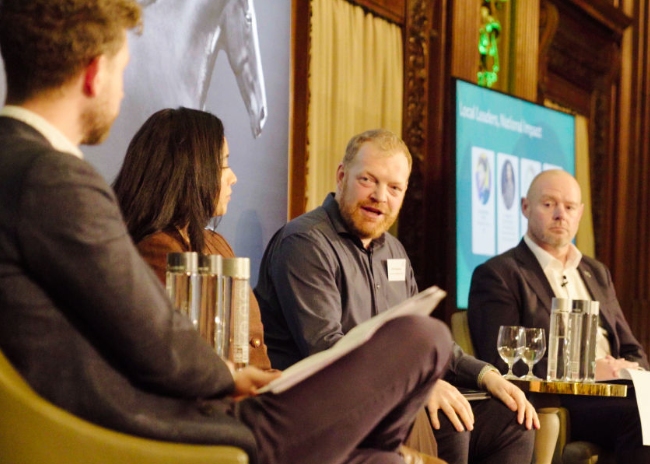
At a time of ongoing uncertainty and accelerating climate impacts, Lloyds Corporate & Institutional convened business leaders, policymakers and sustainability experts for its Growth, Investment & Energy Transition Briefing. The purpose was to move beyond ambition and examine how the UK’s transition to a low carbon, climate-resilient economy is unfolding in practice - and what this means for competitiveness, investment and long-term growth.
With perspectives spanning housing, transport, finance, insurance, investment and regional approaches, the discussion reinforced a clear conclusion: the energy transition is no longer a future destination. It is a live economic transformation and opportunity already reshaping business models, capital allocation and regional economies across the UK.
Opening the briefing, former Energy Minister Chris Skidmore OBE framed the UK’s transition within a shifting global and geopolitical landscape. He argued that ongoing uncertainty has strengthened the economic and security case for clean energy, pointing to record global investment in clean technologies now exceeding fossil fuels.
The UK’s ability to grow GDP while cutting emissions demonstrates that decarbonisation and competitiveness are not mutually exclusive. With electrification increasingly outperforming fossil fuel systems on cost, resilience and security, clear sector level transition plans and scalable sustainable finance are now essential to unlock private capital. Framed correctly, the transition should be seen not as a regulatory burden, but as a modern industrial strategy and a defining growth opportunity.
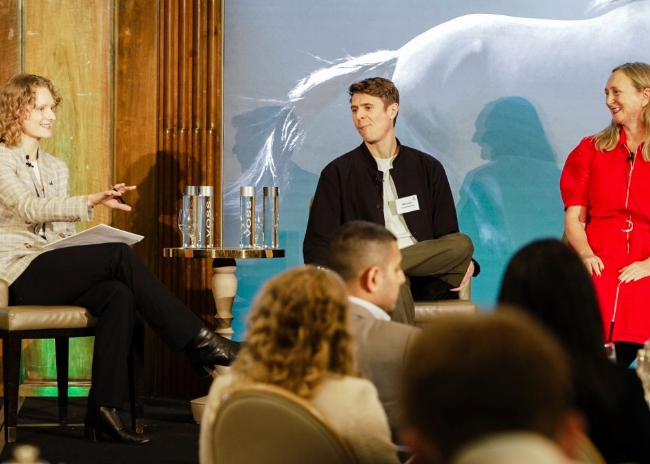
Chaired by Sophie Dejonckheere (Lloyds Corporate & Institutional), the second panel shifted focus from decarbonisation to the growing financial importance of physical climate risk and adaptation. Contributions from Viola Lutz (Moody’s), Holly Roberts-Harry (Howden) and Arun Kelshiker (Invesco) underlined that physical risks are no longer theoretical; they are already affecting asset performance, insurance availability and capital allocation.
Advances in catastrophe and climate modelling mean hazards, exposure and vulnerability can now be quantified with increasing precision, bringing physical risk firmly into boardroom and investor decisions. With trillions of dollars of global debt exposed to climate sensitive sectors, adaptation is emerging as a strategic priority rather than a defensive cost.
The panel highlighted how insurance markets are evolving - and how parametric insurance, resilience-linked products and innovative financing structures are beginning to support earlier investment. From an investor perspective, credible resilience strategies are increasingly associated with stronger confidence, lower risk premiums and more durable long-term valuations.
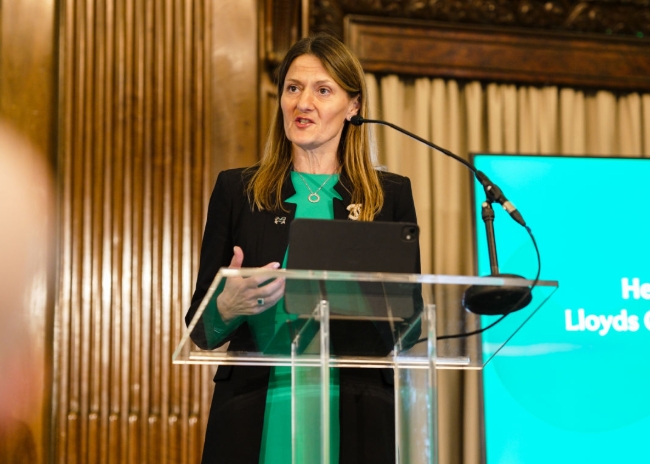
Closing the briefing, Lisa Francis (Lloyds Corporate & Institutional) reflected on a theme echoed throughout the event: the UK has set its ambition, and the next decade is about execution. Across transition planning, climate resilience and regional development, organisations are shifting decisively from targets to delivery, turning intent into tangible economic opportunity and long-term value creation.
For businesses looking to strengthen their transition strategy or explore the financial, sectoral and advisory support available, you can learn more here.

Explore the unique drivers and opportunities in the UK’s regions to achieving sustainable growth.

A dedicated CTP team of subject-matter experts help organisations build robust, actionable transition plans that align with business objectives and market best practices.
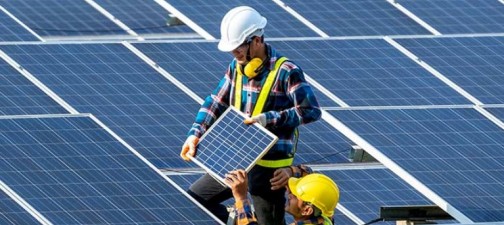
Financing options to support your organisation’s transition strategy including a range of discounted lending products, and vehicle fleet leasing options.
All lending is subject to status. Eligibility criteria applies.