The 50 30 20 rule
The 50 30 20 rule is a simple budgeting method, which you can use to plan out how much you should spend and save each month.
What is a 50 30 20 budget?
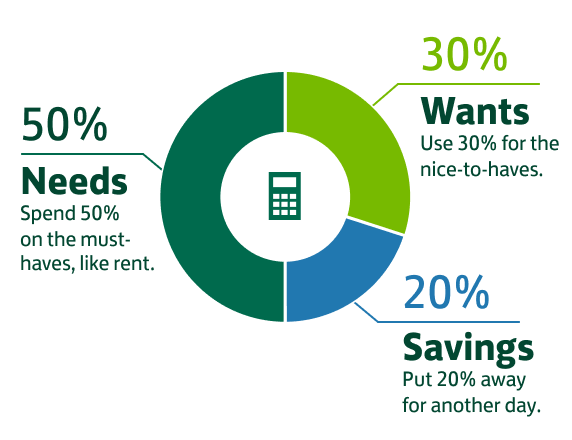
The 50 30 20 rule or budget divides your monthly income after tax into 3 clear areas.
- 50% of your income is used for needs. This can cover everything from bills to food shopping.
- 30% is spent on any wants. Think days out with your family, dinner at a restaurant or any holiday plans.
- 20% goes towards savings. This includes things like topping up your emergency savings fund or setting aside money for investments.
You might find sticking to the 50 30 20 rule is easier than some budget plans. Having only 3 categories to keep track of can save you valuable time and stress worrying about what to do with your pay.
It also gives a balanced structure between essentials, enjoyment and planning for the future.
How can I use the 50 30 20 rule?
First things first, you should work out which of the 3 categories your spending falls into. This can help you get the best out of the 50 30 20 rule. Take a look at each section to see where your spending may sit.
What does your 50 30 20 budget look like?
To get a better idea of what your 50 30 20 budget may look like, here are some useful examples.
If your monthly income is £1,800 after tax, your 50 30 20 budget would work out at:
- Needs - £900
- Wants - £540
- Savings - £360
Your 50 30 20 monthly budget examples
You can use the table to get a better idea of how a 50 30 20 budget can work for you, based on different monthly salaries.
|
Salary (after tax) |
50% needs |
30% wants |
20% savings |
|---|---|---|---|
|
Salary (after tax) £1,000 |
50% needs £500 |
30% wants £300 |
20% savings £200 |
|
Salary (after tax) £1,500 |
50% needs £750 |
30% wants £450 |
20% savings £300 |
|
Salary (after tax) £2,000 |
50% needs £1,000 |
30% wants £600 |
20% savings £400 |
|
Salary (after tax) £2,500 |
50% needs £1,250 |
30% wants £750 |
20% savings £500 |
|
Salary (after tax) £3,000 |
50% needs £1,500 |
30% wants £900 |
20% savings £600 |
As you can see, the 50 30 20 rule works for any kind of budget. It’s particularly useful if you want to track your spending more closely, find new ways to manage your income or would like a clearer, more committed approach to saving.
Making the most of your 20%
Once you’ve paid off any existing debts and set up your emergency savings fund, it’s time to make your money work harder. Whether you want to save or invest, you can use the 50 30 20 rule to get the most out of your income. Explore the different options available to you, such as:
- Savings – having stability and flexibility in the short-term.
- Pensions – growing your money for the future.
- Investments – focusing on your mid to long-term goals.
Let’s look at the details
Looking for more budgeting tips and ideas?
Browse our other money management resources that can help you stay on track with your wants, needs and savings.
You may also like
